The Day I Realized We're Breaking Our Developers
A candidate built a flawless microservices architecture in an interview, and it changed how I think about the way we grow engineers.
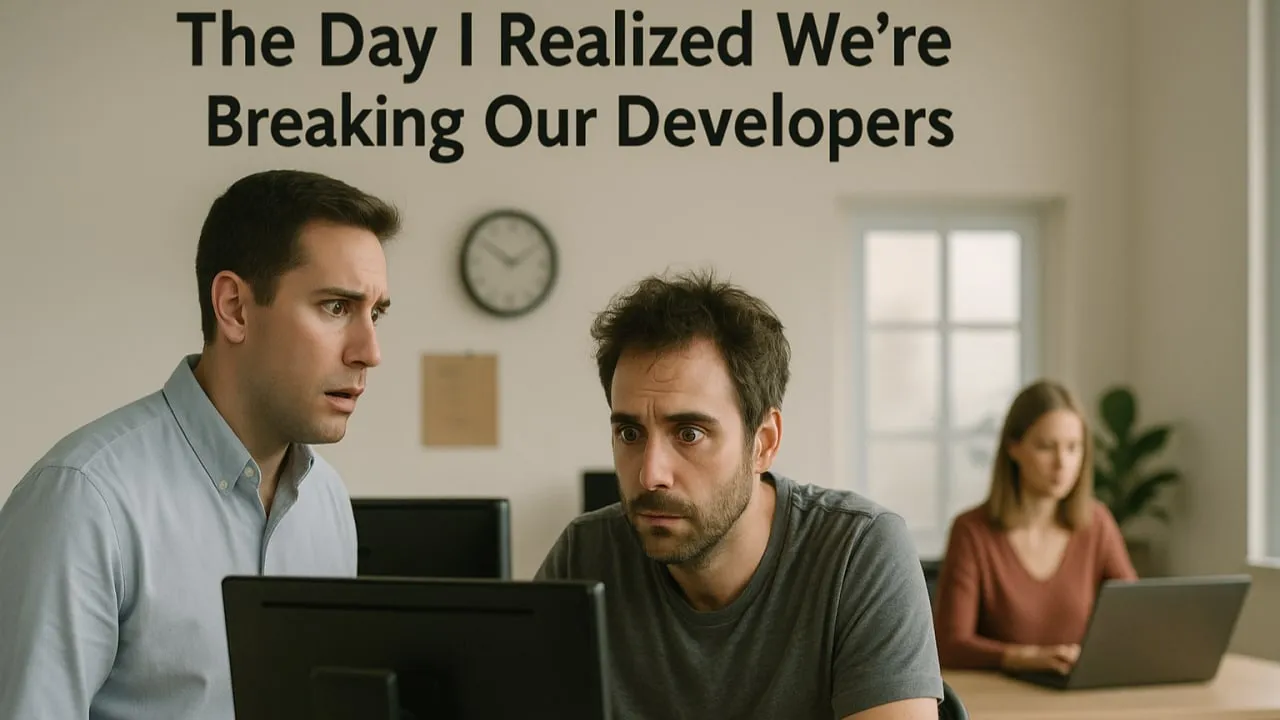
Last week, I sat across from a candidate who had just built a flawless microservices architecture in part of an interview step. The code was clean, the patterns were correct, and the implementation was good. I was impressed — until I asked a simple question.
“Walk me through your decision to use an event-driven pattern here instead of synchronous calls.”
Silence.
“What would happen if this service went down?”
More silence.
“How would you handle this differently if we had stricter latency requirements?”
The confident developer who had just architected a complex system suddenly looked lost. They could implement anything AI suggested but couldn’t explain why any of it mattered.
That’s when it hit me: after years of interviewing developers from junior to architect level, I’m watching us accidentally create a generation of brilliant code correctors who’ve forgotten how to think.
But this isn’t just a software engineering problem. It’s everywhere.
I see it when my nephew asks AI what to wear to a job interview instead of thinking about the company culture and role. I watch colleagues use AI to write emails without considering the nuance of their relationships with recipients. People are asking AI what to cook for dinner, how to respond to relationship conflicts, even what hobbies to pursue.
We’re outsourcing our decision-making to algorithms in ways that seemed unimaginable just two years ago.
This wasn’t just one interview. Over the past year, I’ve seen this pattern repeat dozens of times. Developers who can build faster than ever before, but struggle to answer the fundamental question every senior engineer should master: “Why?”
The productivity statistics tell part of the story — AI coding assistants are boosting developer output by 26%. But here’s what the numbers don’t capture: we’re trading speed for something far more valuable. We’re losing the ability to think critically about the problems we’re solving.
We’ve created a paradox: developers are becoming more productive while simultaneously becoming less capable. And unlike choosing what to have for lunch, the consequences of this trend compound into the systems that run our world.
What can we do?
Start every solution with a 10-minute manual sketch. Before opening any AI tool, force yourself to think through the problem. What are the core components? Where might things break? What assumptions are you making? This primes your brain to evaluate AI suggestions rather than just accept them.
Practice the “three approaches rule.” For every significant problem, identify three different ways to solve it. AI tools often converge on similar solutions, but innovation happens in the spaces between conventional approaches.
Embrace the struggle. Yes, thinking through problems manually is slower and harder. But that struggle is building the mental muscle that distinguishes senior engineers from junior ones. It’s the difference between following a map and being able to navigate.
Turn every code review into a teaching moment. Don’t just check for bugs in AI-generated code — ask the author to explain the reasoning, discuss alternatives, and identify potential issues. This transforms code reviews from quality gates into learning opportunities.
The developers who will thrive in the AI-augmented future won’t be the fastest prompt engineers. They’ll be the ones who can think systemically, reason about trade-offs, and solve novel problems that AI has never seen before.
The question isn’t whether AI will change how we develop software — it already has. The question is whether we’ll intentionally cultivate the human skills that make AI tools powerful, or accidentally train ourselves out of the very thinking that drives innovation.